Feature
Scattering Seeds in the Desert
Shepherd of the Valley Lutheran Church in Navajo, N.M., is the only LCMS congregation serving the largest native American reservation in the United States.
Amid the rocky, red landscape of Navajo, N.M., the Gospel light is shining — even if sometimes it feels like a solitary candle in the desert.
Here, the Rev. Timothy Norton serves Shepherd of the Valley Lutheran Church, where some 30 people gather each week to receive Word and Sacrament. The church is located within the Navajo Nation, the largest native American reservation in the United States both by size and by population. Today, the Navajo seek to preserve their unique language and culture, which has produced the Code Talkers of World War II and artistic pursuits in weaving and silversmithing.
Sharing Burdens and Struggles
On a July afternoon, Norton and second-year deaconess student Emily Wilson, who is studying at Concordia Seminary, St. Louis, visited the homes of several families in the community. Two of the families used to attend church regularly but have not come recently; the other — a father and his young daughter — believe in Jesus Christ and have helped with yard work on the church property, but they have not yet attended a service.
During each home visit, light conversations quickly took a more serious turn, as the residents shared about the difficulties around them: addiction, suicide or suicide attempts, loved ones gone missing, serious medical issues, poverty, abuse.


Mother of three Staci Crank talked about her struggles with drugs and alcohol. Eventually, she went to rehab and was able to regain custody of her children. Today, she’s pursuing the education necessary to become a social worker so that she can be an advocate for children and help other families on the reservation who are going through the same thing.
At another house, Darrell Tsosie talked about his career in the U.S. military, as well as his subsequent struggles with PTSD and addiction. He now raises his daughter, Elizabeth, on his own, after his wife’s sudden and unexplained disappearance several years ago.
“I’m thankful that even though I had given up on God, He never gave up on me. I’ve got a lot to be thankful for today,” Tsosie said, with a nod toward Elizabeth.
At the end of each visit, Norton and Wilson shared relevant Bible passages and prayed with the families. With Tsosie, Wilson shared Romans 8:37–39, noting that no matter where we travel, what we experience or where our loved ones may be, “nothing can separate us from God’s love.”
Any one of the stories shared that day would be a lot for a pastor to deal with, but here “nearly every family has been impacted by addiction,” said Norton. In the middle of this situation, he has been sharing the Gospel at Shepherd of the Valley since 2013.
‘Give It to the Holy Spirit’
Shepherd of the Valley was founded in 1969. Prior to the Norton family’s arrival, the church was vacant for seven years. During this time, founding member Louise Lee did her best to keep some activities going, even when the only people coming were members of her own family.
Norton, a former Lutheran Church—Missouri Synod (LCMS) missionary in West Africa, was a director of Christian education when he first arrived. But he quickly saw that what the church really needed was a pastor.
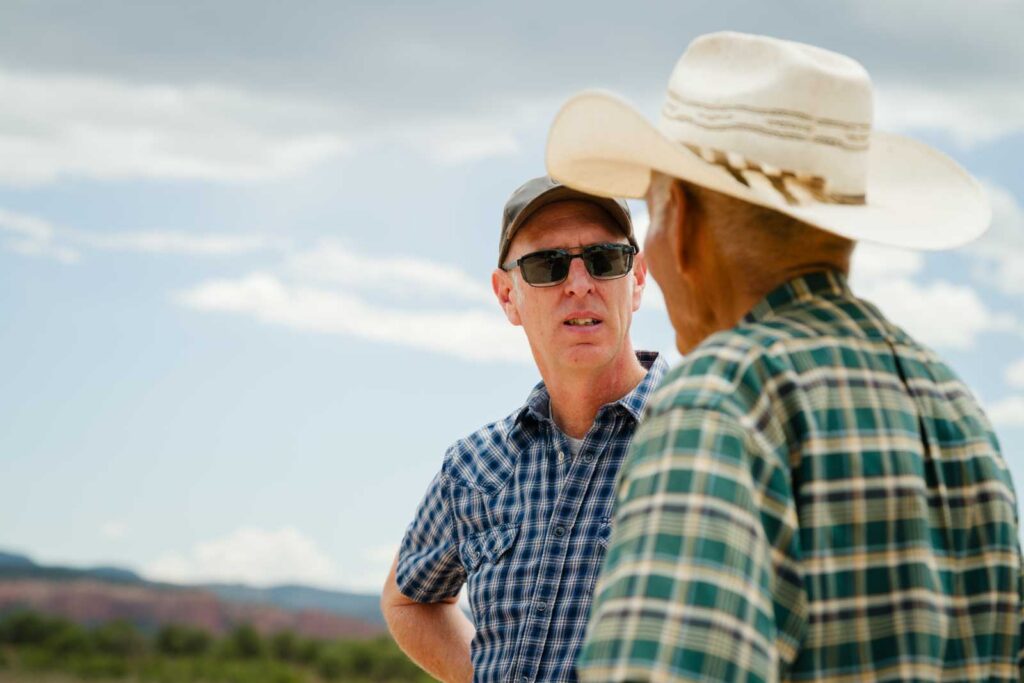
“I could lead Bible studies and do evangelism, which is what I used to do in Africa, but they also needed somebody to baptize and administer the Lord’s Supper,” he said.
He immediately began looking into his educational options. In 2017, he graduated from the Cross-Cultural Ministry Center at Concordia University Irvine in Irvine, Calif.
“There are thousands of people here that have never heard the Gospel — or at least what we would call the pure Gospel. So, that’s what got me interested in the first place,” he said. “Not everything transferred from my previous missionary experience, but some things did, and that helped.”
It’s a challenging ministry. People move frequently. Few are raised in Christian homes, although many have been impacted by false teaching. In addition, traditional Navajo spirituality takes a “quid pro quo” approach: “Their traditional view is that you go see a medicine man when you have a problem, and he’ll fix it for you,” Norton said. “That leads to them thinking, you say a certain prayer, you do a certain thing, and then your problem is over. But that’s not how it works. … We’re called to bear the cross, and the Lord may not lift it from us in this life. That is really difficult to teach people.”


As people ate burrito bowls and played games at the church during a community dinner in early July, Lee pointed to three women who had been attending Shepherd of the Valley with her for years. Everyone else, she noted, started coming after Norton arrived.
“A lot of times, I think [church] is like a pit stop for people,” she said. “People come, we get to know them and help them, and all of a sudden they leave. … But we’ve planted a lot of seeds in this mission here. Of course, we can’t make them grow; only God can.”
Lee gets frustrated sometimes, but a wise friend once reminded her, “You can’t change your people. Give it to the Holy Spirit.”
“God is good all the time,” she continued, “so we just have to keep on going.”
Supported by the Synod
In January 2026, Norton attended a meeting of the Synod’s All Nations Council, where he met the Rev. Stephen Heimer, manager of LCMS All Nations Ministry. Heimer offered Norton a grant to bring in a summer field worker from one of the LCMS seminaries.
Heimer is interested in supporting more opportunities like this in the future, because they get “seminary students out to a reservation for these experiences, help connect the ministries back to the Synod, and raise awareness of the work [the ministries] are doing.”
On June 11, Wilson arrived to spend her summer living on Shepherd of the Valley’s property.
As part of her deaconess studies, she is required to participate in two field education modules, and she thought learning about ministry on a reservation “would be a wonderful stretching opportunity.” On her first day, after visiting a church member’s home and spending time talking to Norton and his wife, Heidi, Wilson quickly realized, “I was going to need to rely on the Lord in all of this and reach out to my prayer partners, my family and friends, to say please pray for my resilience and that I would continue to point people to the real hope that they have in Jesus.”
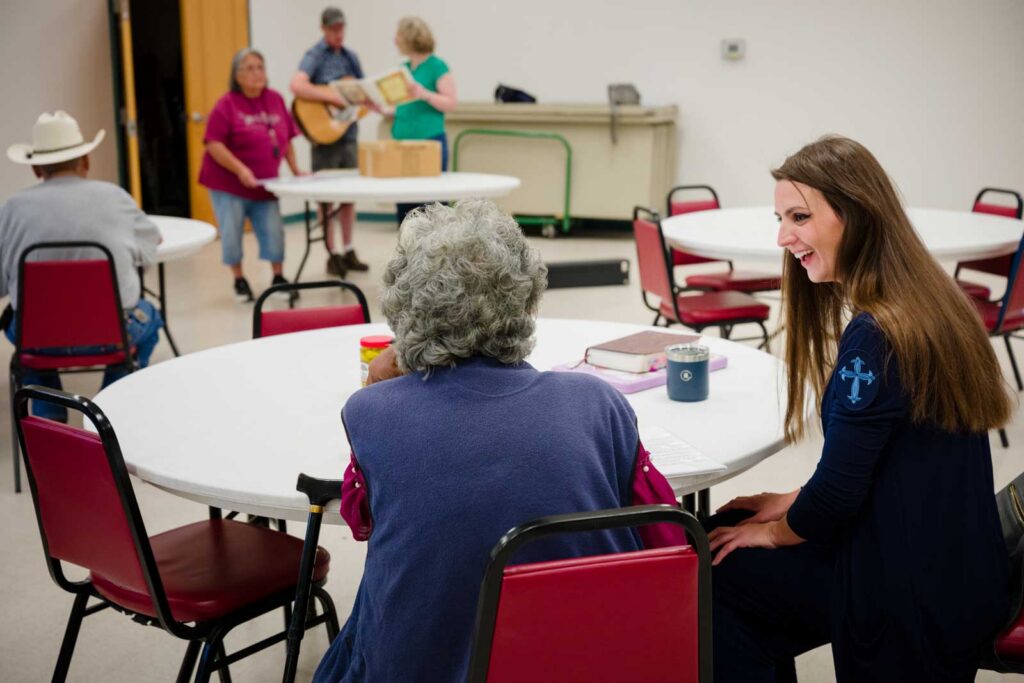
Just a few days later, she chaperoned a group of preteen Navajo youth who attended a catechism camp at Lutheran Valley Retreat in Colorado. Soon after, she began holding a women’s Bible study, assisting the various individuals and short-term teams that come to Shepherd of the Valley each summer, and accompanying Norton on visits to the senior citizen group that meets at a local community center. Later in the summer, she also chaperoned a trip to a native American Lutheran youth gathering at Camp Perkins in Idaho.
Although Wilson came to New Mexico to learn, her instinctive and quiet care of everyone around her — church members, residents, visitors and the Nortons alike — was a blessing.
Many people across the Synod pray for and support the work of scattering these Gospel seeds in Navajo, N.M. Grace Lutheran Church, Albuquerque, accepts and processes monetary donations to help keep Shepherd of the Valley afloat. Teams from other LCMS congregations hold vacation Bible schools and complete other projects each year. This summer, Norton and Wilson gave out art supplies to children and youth thanks to a generous in-gathering from the Rocky Mountain District of the Lutheran Women’s Missionary League.
“It is the whole church, really, that supports this mission. A lot of people have given time, energy and effort,” Norton said. “We get to see all the blessings that go through here, but they are from the Lord’s people, who really want [the Navajo] to have the benefits of life and forgiveness and salvation in Christ.”
Learn More
- Learn more about LCMS All Nations Ministry
- Make a gift to support ministry throughout the United States
Share Jesus with the World
Your generosity today makes possible your Synod’s witness and mercy efforts both at home and abroad.
Are you looking to direct your gifts for work that’s more specific?
Visit the LCMS online ministry and mission catalog to find those opportunities most meaningful to you!
Don’t see what you’re looking for?
Contact LCMS Mission Advancement at 888-930-4438 or mission.advancement@lcms.org to talk about all the options available.
Megan K. Mertz
Managing editor of Lutherans Engage the World and chief copy editor for LCMS Communications.